
 |
||||||||||||||||||||||
 |
|
|||||||||||||||||||||



















|
|||||||
|
|||||||
|
|||||||
|
|||||||
|
|||||||

|
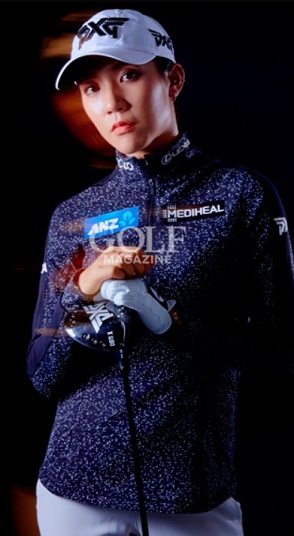
By March she rose to the #3 women's world amateur ranking. At this point, her rivalry with good friend Cecilia Cho heated up. Ko claimed the Australian Stroke Play title by beating Cho in a two hole playoff, but lost the Australian Amateur Match Play in the quarterfinals. Ko then won the New Zealand Stroke Play Championship, beating Cho by 9 shots. This event set up the draw for the New Zealand Match Play Championship, which once again ended up being a final matchup between Cho and Ko. And once again, Ko triumphed, beating her friend 4 and 3 in the final despite the fact Cho had won the event the two previous years. This allowed Ko to rise to #1 in the amateur rankings, knocking Cho down to #2. Ko became the first woman to ever hold both the Australian and New Zealand Stroke Play titles in the same year. In May, Ko also won the Muriwai Ladies Open, beating a field of pros and amateurs. She then launched her first effort to play in the big European and American amateur events. She lost early in the British Women's Amateur, but claimed the co-medalist honors at the US Women's Amateur before falling in the second round of match play. Ko then had an operation to fix an ailing wrist, and missed six weeks of action while she recovered. But in early 2012, it did not take her long to get back to her winning ways. In January, she won the Australian Women's (Match Play) Amateur. She is believed to be the first woman to EVER hold the Australian Women's Match Play + Stroke Play titles and the New Zealand Amateur Stroke play and Match Play titles all at the same time. That's an extraordinary accomplishment for anyone, let alone a 14 year old. And yet, Ko was just getting warmed up. The next week, she attended the NSW Open on the ALPG. The previous year she had come within one stroke of rewriting the record books when she finished second here. This time, she left nothing to chance. In the second round, she shot a blistering 64 to take a four shot lead. In the final round, despite strenuous pressure from professional Lindsey Wright, Ko never wavered, and won the tournament easily by four. She thus became the youngest person to ever win a professional golf event, anywhere in the world, breaking the record held by Ryo Ishikawa of Japan, who was 15 when he won his first pro title. She also crushed the women's record held by Amy Yang, who had won the ANZ Ladies Masters as a 16 year old in 2006. There had been only a couple of press people covering the win, but as news of her achievement got out, Ko was swamped with media attention. As it turned out, she was playing the very next week at the RACV Australian Ladies Masters, as was another teen superstar in the making, Alexis Thompson. Ko had never met Thompson before, and the promoters wasted no time in pairing the two for the first two rounds of the Masters. Ko's goal was to simply make the cut, but she wound up in the top 20 most of the week before fading a bit on Sunday to finish tied for 32nd. A week later, she managed an 18th at the ISPS Handa Australian Women's Open, her first ever LPGA event. She was also the low amateur at this event. It was a foreshadowing of what was to come. Lydia Ko's summer of 2012 ranks as one of the most amazing stretches of golf anyone has ever played. Simply put, she put one remarkable performance after another together, culminating in a record shattering appearance at the Women's Canadian Open in August. The fun started when she traveled to the States to play in her first Major, the US Women's Open. She had qualified for the event by being the top amateur in the world, and for much of the week, she was easily the top amateur in the field. She struggled mightily on her final three holes and almost gave the low amateur crown away, but she still held on, finishing tied for 39th. Next she played at the US Girls Junior Championship. She made it all the way to the semifinals, where she lost to American Alison Lee. A few weeks after that she played at the US Women's Amateur, arguably the most important amateur event in the women's game. Lydia finished runner-up in the stroke play portion (Hyo Joo Kim won that, but lost in the second round of Match Play). In Match play, she worked her way through the field, meeting the second ranked amateur in the world, Ariya Jutanugarn, in an epic semifinal clash. Ko downed the Thai teen, then beat American Jaye Marie Green in the final 2 and 1. Ko became the second youngest in history, behind Korean American Kimberly Kim, to ever win this title. And amazingly, she had an even bigger coup in store after that! Two weeks after the Amateur win, Ko was in the field at the LPGA's CN Canadian Women's Open in Vancouver, British Columbia. Ko played well the first two days, hung tough through some dicey play on Saturday, and found herself in the lead with 18 holes to go. On Sunday, playing with Major winners Jiyai Shin and Stacey Lewis, Ko dug deep, but still was caught by the turn. It was at that point that she kicked into another gear, producing one of the most dazzling displays of golfing excellence in LPGA history. She put the hammer down, making four straight birdies to blow past the field of Major winners and grab the historic three shot win. She was the youngest player (by more than a year) to ever win an LPGA event at just a little over fifteen years of age, shattering the record by Lexi Thompson that had been set just the previous year. She also became the first amateur in over forty years to win on the LPGA tour, and just the fifth in history. The last amateur who won, Joanne Carner, was nearly twice Ko's age when she did it. And Ko beat a field containing almost all the best women's golfers in the world. It was an insanely brilliant performance that catapulted the teenager into the mainstream press. Golf Channel, not known for in depth LPGA coverage, devoted the first 20 minutes of their Golf Central show to Ko's triumph before they got to the PGA tour results. The next month, Lydia played at her second LPGA Major, the Ricoh Women's British Open. In the terrible weather at Hoylake, Ko once again earned low amateur status, finishing tied for 17th. She next showed up at the Women's World Amateur Team Championship, also known as the Esprito Santo Cup, representing New Zealand. Although Korea (headed by Hyo Joo Kim) won the team trophy, Ko won the individual honors, dusting the rest of the field by six strokes. Ko played in the Swinging Skirts event in Taiwan at the end of the year. She finished tied for 26th. After Christmas break, she returned to action at the Australian Women's Amateur, where she was defending champion. But she bowed out early in match play, and the event was won by Korean Australian star Minjee Lee (who had won the US Girls Junior in 2012). The next week, she was back to defend another title at the New South Wales Open. She gave it a great effort, and found herself in a duel at the end with 2011 champion Caroline Hedwall and Minjee Lee. Ko made a masterful par save on the 16th hole on Sunday, but made a fatal mistake off the tee on 17, and Hedwall won the event with Ko finishing second and Lee third. Ko didn't have to wait long for another shot at a pro trophy. Just two weeks later she was back in action at the New Zealand Women's Open. She had come close to winning this event several times, but neither she nor any New Zealander had ever taken the title. But in 2013, Ko started well, finishing the first round within a shot of the lead. She had a share of the round 2 lead with Korean Seon Woo Bae, who shot a course record 64 just to catch her. In the final round, Ko was severely challenged by several players, losing the lead several times, but she hung tough, sinking a par on the final hole for a one shot victory. This was her third pro win in a little more than a year, and she was still not even 16 years old. Simply incredible! She also became the youngest winner in the history of the Ladies European Tour, beating the record once held by Korean Amy Yang. The next week, Ko was back in action at the LPGA's season opening event, the Australian Women's Open. Playing with world #1 Ya Ni Tseng, she shot a mid-boggling 10 under par 63 in the opening round. She contended for the rest of the week before being beaten in the end by Korean superstar Jiyai Shin. Ko finished third behind Tseng and Shin. Ko had a great year playing LPGA events. She played in all five Majors in 2013 and was low amateur in all but one. She only contended at one of them, the Evian Championship, but there she was in a dog fight the whole final round with Suzann Pettersen, finishing second only to that Norwegian player in the end. The previous month, she successfully defended her CN Canadian Women's Open win of 2012, but on a completely different course. Once again she found herself battling with Pettersen for the title, but unlike in France, it was Ko who walked off with the win, in that case a five shot romp. By the time she finished second at the Evian, her professional world ranking had risen to 4th, and she had left more than a million dollars on the table. It was apparent she would soon have to turn pro; she had not played an amateur event since January. She did just that in October, announcing her new status via a You Tube video. Soon after that, the LPGA accepted her petition to waive the 18 year old age limit for Ko, allowing her to join the tour in 2014 as a 16-year-old rookie. Not too long after that, the endorsement deals started rolling in, including one for ANZ Bank and another rumored one with Calloway Golf. Ko also controversially left her longtime coach Guy Wilson to go with David Leadbetter. Whether that was a wise move will remain to be seen. Meanwhile, it did not take Ko long to establish herself as a pro. Her first event was the CME TitleHolders, where she finished 21st. But her next try came in December at the Swinging Skirts. Paired with world #1 Inbee Park and world #5 So Yeon Ryu in the final group, she outplayed them both to take the trophy, with Ryu second and Park third. It was her first win as a pro and fifth professional title overall. To no one's surprise, Lydia had a fantastic rookie debut on the LPGA tour. 2014 actually started with a surprise loss to Mi Hyang Lee at the New Zealand Women's Open (not an LPGA event). Ko started her LPGA career not long after that., notching two top tens and two top 20s in her first four events. She nearly won the Founders Cup, her 5th event, but didn't have to wait much longer before getting her first win as an LPGA member at the Swinging Skirts (an event she also won when it was in Taiwan; but now it was in San Francisco and an official LPGA event). A few months after that she won the Marathon Classic, but her biggest win came at the end of the year when she captured the CME Group Tour Championship in a playoff. That win was worth $1.5 million, because she not only won the $500K first prize but also the bonus for getting the most points in the CME competition throughout the year, worth a cool million (unofficial) dollars. Needless to say, Ko easily won the Rookie of the Year award. She finished the year slightly ahead of Stacy Lewis as the #2 golfer in the world. She made over $2 million on the LPGA (the most ever made by a rookie), notched three wins and 15 top tens, and nearly broke 70 in scoring average. Altogether amazing! And she still has not missed a cut in any pro event ever, which is insanely consistent. Ko had an even more amazing second season on the LPGA than her rookie year. She won five tournaments during the year, including the final Major, the Evian Championship. Her win there, by shooting a final round 63, made her the youngest woman to ever win a Major on the LPGA tour. She also became the youngest to ascend to the number one ranking, a spot she held at two different times in 2015. Her money total, over $2.8 million, is the highest money total ever won in a single season by a Korean born golfer. She thus became the youngest player to ever lead the LPGA money list. Ko also managed to edge out Inbee Park by two points to capture the Player of the Year, again making her the youngest to get that award. It was close; Park held the lead much of the year. Then, Ko went on a late season tear, winning the Canadian Women's Open in a playoff (her third win at that event, and second in Vancouver). She followed that with the Evian win in her next start, barely missed winning in Malaysia, finished tied for 4th in Korea at the Hana Bank, then won the Fubon in Taiwan. But Inbee struck back, winning the Ochoa Invitational to move to within three Player of the Year points of Ko. Ko finished behind Park at the final event of the year, but close enough to maintain her lead and win the Player of the Year. Ko also finished second to Park in the scoring average, thus just missing adding the Vare Trophy to her haul. Again, it was thanks to Inbee's last two events that she was able to top KO in that category. She also won the million dollar bonus at the CME Group Tour Championship. Ko also won the New Zealand Women's Open, an LET event, early in the year. Ko had another phenomenal season in 2016, although she ended the year with an unusually weak stretch of golf that saw her revising her approach for 2017. She spent the entire year at #1, and once her chief rival Inbee Park was hit with multiple injuries, no one seriously threatened her throne all year. Ko started the year on an absolute roll. She notched top threes in three of her first four starts and won the Women's New Zealand Open on the LET. She then won the Kia Classic and followed that up with another win at the ANA Inspiration for her second straight Major victory. That one was close all day, as both she and In Gee Chun were not playing well but still managing to save par after par. Ariya Jutanugarn took the lead and looked poised to win when she dumped her drive on the final hole into the water. A few minutes later, Ko hit her third shot right next to the hole and tapped in for birdie, claiming a one shot win over Chun and Jutanugarn. Lydia had a mediocre run the next couple of months, while Ariya won three straight in May. They reached the year's second Major, the KPMG, with Ariya looking to make it four straight, while Ko looked to win her third Major in a row. It all came down to the final few holes. Ariya fell just short, and Ko missed a crucial short birdie on 17, which forced her into a playoff with Brooke Henderson. Henderson hit a great approach on the playoff hole and won her first Major, while Ko had to settle for second. Ko wasn't done winning, though. She grabbed two more titles in Arkansas and Ohio. She also was in great position to win the US Women's Open, taking a third round lead. But she made a major mistake on the ninth hole and fell to a tie for third. Still, her three great 2016 Majors insured she would win the Annika Award for best record in the Majors for 2016. Ko struggled at the Women's British Open, but that proved to be a temporary setback. She played great at the Olympics shortly thereafter, and was in the final group on Sunday with old rival Inbee. But Park was unstoppable, and Ko had to settle for the silver medal. Entering the year's final Major, the Evian, Ko was in the lead in all the major LPGA award categories: money list, Player of the Year, scoring average. But at that point, she began to struggle. Not only did she not win again in 2016, she would only make one top ten, and that was a tenth place finish. Jutanugarn would win Player of the Year and win the money list title, while In Gee Chun managed to beat Ko on the final hole of the year to capture the Vare Trophy. Ko responded by firing her caddie and coach and changing clubs for 2017. Ko had her first winless season on the LPGA in 2017. It wasn't a terrible year; she earned about $1.1 million and finished 13th on the money list, and her scoring average was still below 70. But compared to her usual level, it was a giant step down. She did have three runner-up finishes, and 11 total top tens. Meanwhile, her run at the #1 spot in the world rankings ended, and by the finish of the year, she had dropped all the way to 9th. Lydia had a slight comeback season in 2018. Although she was nowhere near her previous form, she did manage a win at the Mediheal Championship, beating Minjee Lee in a playoff. She also tied for second at the Buick Shanghai and finished solo third at the Meijer Classic. At the Majors, she had a tie for 10th at the Evian for her best result of the year. Ko made $1.1 million for the year, finishing 12th on the money list. Lydia played for the LPGA team at the OrangeLife Champions team event in November. She managed a loss when teamed with Sung Hyun Park and a win teamed with Jennifer Song. She squared her singles match against Char Young Kim. The LPGA won the event 13-11. 2019 was another down year for Ko. She had just four top tens during the year and no wins. She earned about $444,000 and was 48th on the money list. Lydia also played at the OrangeLife Champions Trophy LPGA/KLPGA match. Ko teamed with Minjee Lee to win 3 & 1 over Ji Young Kim and Ye Rim Choi, and teamed with Minjee to lose 5 & 4 to Hee Jeong Lim and Min Ji Park. Lydia beat her old friend Cecilia Cho in the singles 3 & 2. In 2020, the whole world was rocked by the Covid-19 pandemic. The LPGA and KLPGA tours canceled and postponed many tournaments. Lydia played at the Australian Women's Open before the pandemic hit, but missed the cut. Her next event came at the end of July, the Drive On Championship. She did OK there, but it was the next week, at the Marathon Classic, where she seemed poised to at last get her first win in years. She started with a 64-65 opening salvo, and followed that with a 68. She had a five-shot lead over the previous week's winner Danielle Kang with six holes to play, and basically just had to walk it in at that point. But then she started making mistake after mistake. She still had a one-shot lead when they reached the final hole, a par 5. She got near the green in two, then botched her chip, which rolled into a bunker. Her fifth shot got on the green, but she missed her ten footer for bogey, and Kang had the win. Ko had five top tens on the year, including a 6th at the ANA Inspiration, and she had a good chance to win the US Women's Open, but shot a final round 76 to fall to a tie for 13th. She earned around $678,000 for the year, 9th on the money list. Ko had a massive comeback in 2021. She won for the first time in three years, had a ton of other great results, and finished the year in the top five in the world rankings for the first time in many years. Ko's win came at the Lotte Championship in Hawaii in April, and it wasn't even close: she crushed the field by 7 shots, setting a tournament record of 28 under in the process. She had four additional runner-up finishes, starting with the first event she played in 2021, the Gainbridge. She also made a great run at the ANA Inspiration, the year's first Major. Rookie Patty Tavatanakit was in a zone most of the week, but Ko made a big run at her on Sunday, falling just two shots short, but still five shots ahead of third place. Lydia made over $1.5 million for the year, which put her 5th on the money list; she had 11 top tens in all. Lydia also contended for the Vare Trophy for low scoring average. But with a few events to play, it looked like she would fall a couple of rounds short of the required 70 minimum for the season. She quickly canceled an off-tour event she had scheduled and entered one more LPGA event, which allowed her to reach the 70 minimum. She managed to stay ahead of nearest competitor In Gee Chun, and since the other players ahead of her, like Inbee Park and Jin Young Ko, did not reach 70 rounds, she claimed the Vare Trophy for the first time. Interestingly, the last time she came close to winning the Vare, she barely lost to In Gee, and this time she barely beat her! Lydia played one event on the KLPGA in 2021, the Hana Financial Group Championship; she finished tied for fifth. Lydia started 2022 with a bang, winning the second event of the year, the Gainbridge, while notching a top ten at the first event. But for the next few months, it was the other Ko, Jin Young, who was dominating the world rankings and the headlines. In the summer, Lydia finished 5th at the US Women's Open, tied for 3rd at the Evian, and tied for 7th at the British Women's Open. As Jin Young started to struggle, Lydia moved gradually up the world rankings, into position to challenge for the top. She ended her season brilliantly, winning at the BMW Championship in Korea, and again at the season-ending CME Championship. The latter came with a $2 million winner's check, the largest in women's golf history. She finished the year with all the prizes: tops on the money list with the highest total a Korean-born player had ever achieved (over $4.3 million); a second Player of the Year award; a second Vare Trophy; and she was once again the number one player in the world rankings. She had three wins, three thirds, and 14 top tens. To cap it off, she also got married in December. It's hard to imagine how Lydia might top this, but it looks like she might do that by becoming the youngest LPGA star to ever qualify for the Hall of Fame. She needs just one more win. Stay tuned! After arguably her best season, Lydia had a massive downturn in 2023. She only made $247,000 all year, 90th on the money list. She had a top ten in her first event, then did not have another one until the BMW Championship in October. Those were her only top tens all year. Lydia did actually have a win in December, but it was an unofficial event. The Grant Thornton Invitational was a new tournament where a male golfer was paired with a female golfer. Lydia teamed with PGA player Jason Day to claim the title. She made more money that week than the entire rest of the season. Because of her struggles, Lydia not only did not qualify for the season-ending CME Tour Group Championship, she also lost her Category 1 status, falling to Category 4 for 2024. What a difference a year makes. After struggling in 2023, 2024 was one of the best seasons of Lydia's career. It started with a bang: she won the Tournament of Champions, the first event of the year, and lost the second event in a playoff to Nelly Korda. But she cooled off after that, and it looked like she might have another mediocre season. Her win had moved her to within a single point of qualifying for the Hall of Fame and the pressure was on. One thing she didn't have to worry about was qualifying for the Olympics. She was the only world class golfer from New Zealand, so an Olympic spot was a given. She was determined to get a third medal at the Games: she had won a silver and bronze in the past two games and was 100% invested in completing the set with a gold. Astonishingly, despite her form not being the best most of 2024, she did just that in Paris. The gold also earned her the final Hall of Fame point, becoming just the third Korea-born player to get into the Hall after Se Ri Pak and Inbee Park. Iamgine capping your career by entering the Hall of Fame on the back of winning a gold medal! Incredible. Riding high, she followed that up with a win a few weeks later at the British Women's Open, which was taking place in St, Andrews of all places. And she clinched another win after that at the Kroger Queen City Championship, her 23rd LPGA win (22nd since joining the tour). She earned $3.2 million for the year, third on the money list, and did it despite being 49th in Greens in Regulation, 105th in driving distance, and having only 8 top tens. As she had done all her career, Lydia had once again shown she could get the job done when it counted. |